
It was supposed to look like a steady moment. Cameras lined up, officials watching closely, and two leaders sitting side by side with a shared goal in front of them.
The visit had weight behind it, not just routine diplomacy. There were real stakes, real pressure, and a sense that what was said in that room mattered. And for a while, it held together.
At least on the surface.
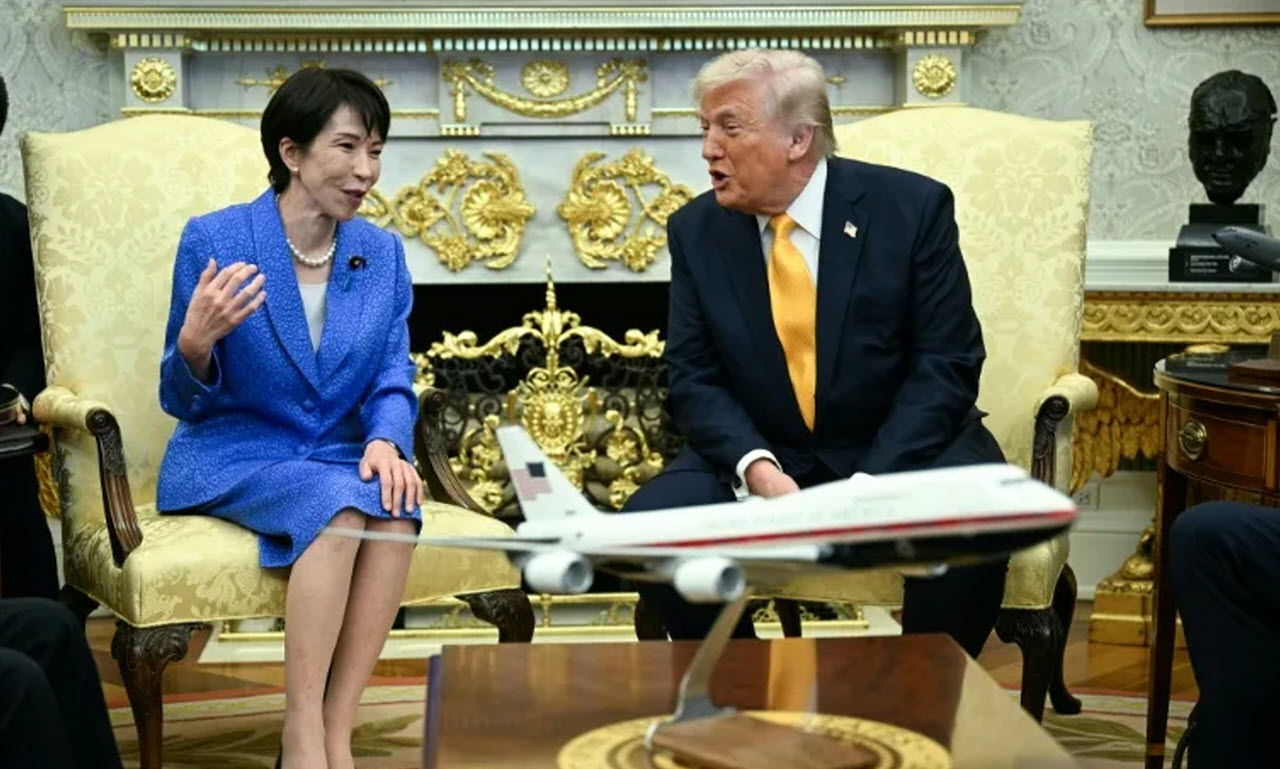
The Japanese prime minister had come prepared, speaking carefully and with purpose. She talked about stability, about calming the energy markets, about keeping things from getting worse.
Her tone stayed measured, even warm at times. She made it clear she saw the United States as central to moving things forward, even saying, “only you, Donald, can achieve peace across the world.”
That set the tone… or at least it seemed to.
But the room was already carrying tension that had not been spoken out loud yet.
The meeting came during a stretch of rising global pressure. The Strait of Hormuz was effectively shut down, oil movement disrupted, and the United States had already taken action against Iran.
And not every ally had been fully looped in beforehand.
That part mattered.
So when a reporter raised the question, it cut straight to the center of it. Why had allies like Japan not been warned before the strikes were launched? It was direct. And it was unavoidable.
Trump answered in a way that at first sounded familiar. He leaned into strategy, explaining that giving too much warning could weaken the impact. Surprise, he said, was part of the point.
That explanation held for a moment. Then he kept going.
What followed shifted the room in a way no one could ignore. The comment landed immediately, and not in the way it was likely intended. There was no laughter, no release of tension. Instead, there was a pause that stretched.
You could feel it.
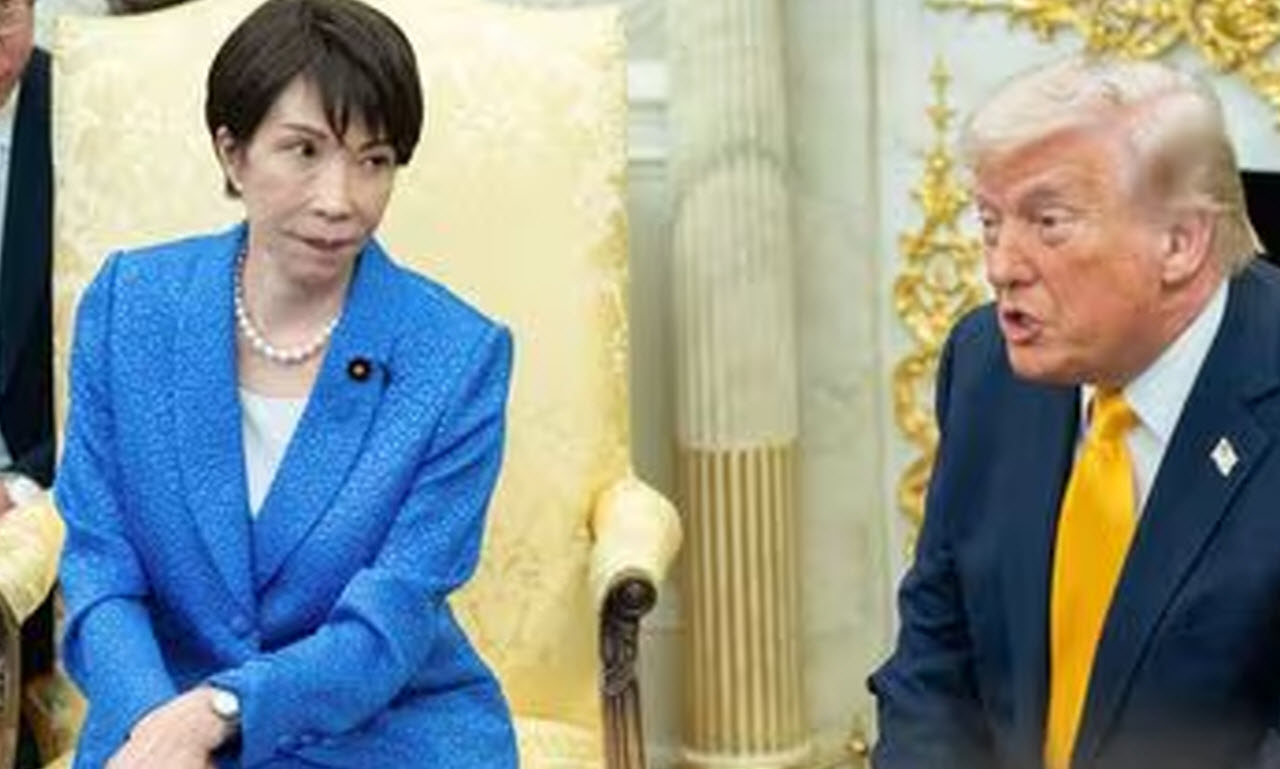
Some in the room reacted right away. A low groan broke through the silence, and the Japanese prime minister, seated beside him, visibly tightened, her reaction clear without a word.
It did not take long for people to understand what had just happened. And once it landed, there was no pulling it back.
The remark reached back decades, referencing one of the most painful moments tied to both countries, and it was delivered as part of a response in a live setting, with cameras rolling.
That contrast made it heavier.
Watch Japanese PM's reaction when Trump makes Pearl Harbor joke https://t.co/FIPBowuCy1 pic.twitter.com/OgRClpcXz6
— New York Post (@nypost) March 19, 2026
Because this was not a casual setting. This was a meeting meant to reinforce trust, to show alignment, to steady things during a volatile moment. Instead, the tone had shifted.
And even as the discussion moved forward, the moment lingered.
They continued talking about energy, about security, about Iran, and the broader risks. There were points of agreement, even praise exchanged.
Trump noted that Japan had been stepping up. The prime minister emphasized that Iran should never obtain a nuclear weapon and condemned attacks in the region.
On paper, the meeting covered what it needed to. But that was not what people carried away from it.
The clip moved quickly online, spreading across platforms almost immediately. Reactions came in fast, and they were not subtle.
Some called it uncomfortable. Others went further. One response summed it up bluntly, “The Art of the Cringe.”
Another wrote, “He knows like four things about Japan and he’s not going to leave any of them on the table.”
Others focused on the moment itself. “The silence after the joke,” one person wrote, capturing what many noticed before anything else.
Not everyone reacted the same way.
Eric Trump responded with support, posting laughing emojis and calling it “one of the great responses to a reporter in history.” That view did not appear widely shared.
What happened next, though, showed a different kind of control.
Despite the earlier moment, the Japanese prime minister continued through the rest of the visit without breaking tone. At the state dinner later that evening, she delivered remarks that stayed positive and composed.
She congratulated the United States on its upcoming anniversary and even added a personal note, speaking about Barron Trump.
“I know he has grown up so much into a very tall, good-looking gentleman,” she said, adding that it was “very clear where he got it from his parents.”
The contrast stood out.
Because earlier that day, the room had gone quiet in a way that said everything without saying anything at all.
And even as the formal parts of the visit moved forward, that moment stayed with people.
Some comments pass quickly. Others do not.
